|
| Technical Data |
Hydraulic Marine Propulsion |
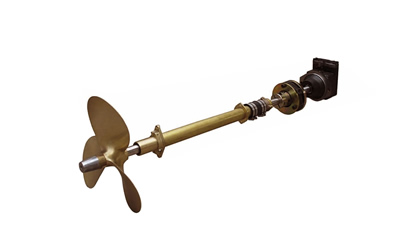
In many cases it may be preferable to drive the propeller shaft by means of a hydraulic motor, isntead of using conventional set up of engine and gearbox. One of the major benefits of hydraulic propulsion is that the propulsion engine does not need to be installed in line with the propeller shaft. This means that the engine may be fitted in any suitable place on board, even athwartships. In addition, should the propeller become fouled or touch the bottom due to running aground, the risk of damage to the propeller shaft assembly, the hydraulic motor or the main engine is almost nil. An integrated pressure relief valve ensures that in the event of overloading, the hydraulic motor is safely bypassed. Particularly in the case of hire craft, this is clearly a great advantage. The hydraulic motor is engaged in a smooth and noiseless manner. The complete assembly is vibration free and the propeller thrust is not transmitted onto the engine, but onto the hydraulic motor instead, which is flexibly mounted on its own bed.
A hydraulic vane pump is fitted to the engine in place of the gearbox. This pump draws hydraulic fluid from a storage tank and delivers it under pressure to the speed and direction of the control valve. The control valve determines the direction and volume of hydraulic flow to the hydraulic vane motor, which can then rotate clockwise or counter clockwise as selected. This hydraulic motor drives the propeller shaft via a flexible coupling. The Vetus system uses a hydraulic pump and motor with fixed swept volumes. |